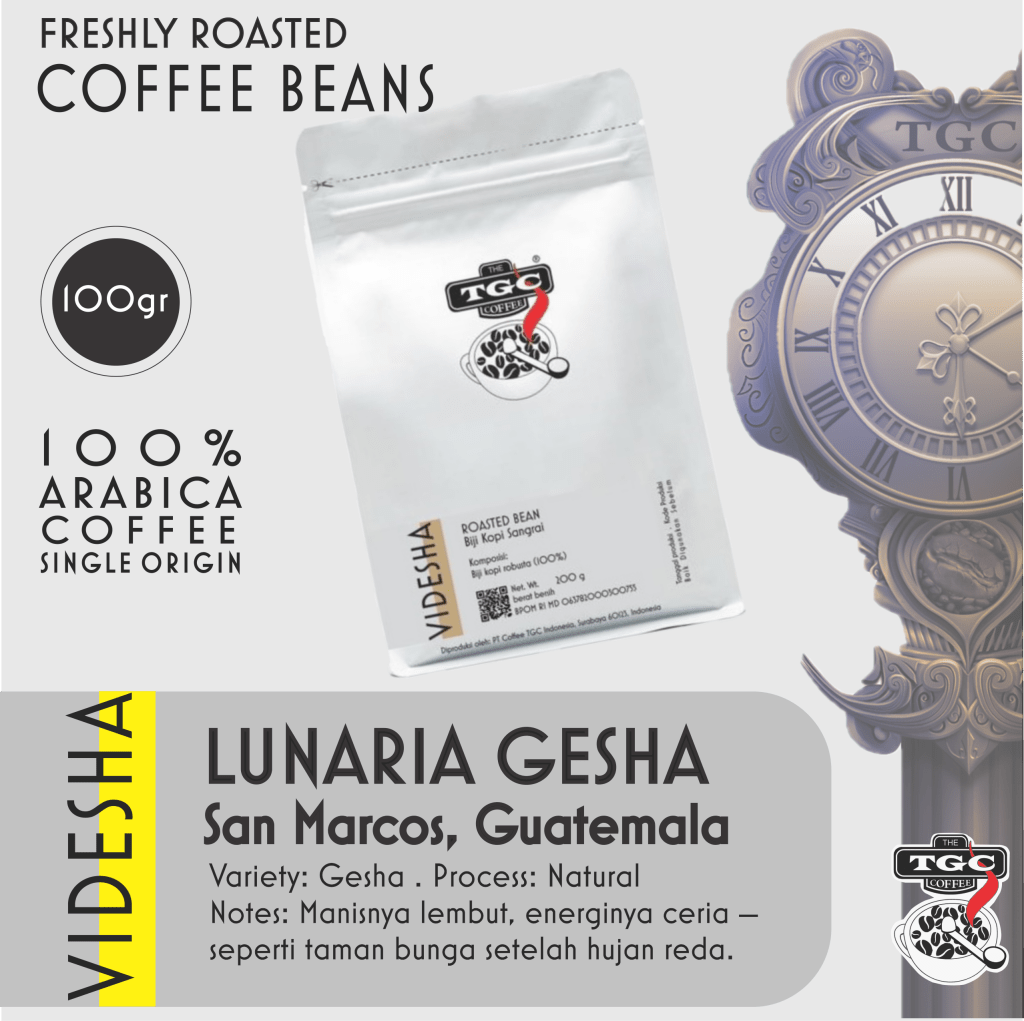
Origin: San Marcos, Guatemala
100% arabica coffee
Process: Natural
Variety: Gesha
Elevation: 1450m ASL
Tasting notes: Manisnya lembut, energinya ceria — seperti taman bunga setelah hujan reda. Setiap tegukan menghadirkan kejutan baru. Ringan langkahnya, cerah jiwanya — Lunaria menari bersama kelopak bunga dan angin sepoi. Ia adalah rasa ingin tahu yang sedang mekar.
Lunaria adalah inspirasi pagimu — menyegarkan, bersinar, dan tak terlupakan.
Mixed berries, tropical fruis, white tea

Cocok untuk: eksplorasi / slow sip
Untuk memudahkan mengingat jenis kopi yang kamu sukai ini, TGC mengelompokkan-nya kedalam karakter VIDESHA – dalam bahasa sansekerta विदेश berarti “luar negeri” atau “negara lain”.
TGC mem-visual-kan karakter kopi ini dengan sebuah jam antik. Jam ini jarumnya tidak bergerak, inspirasi untuk tagline TGC:
“time stops in a cup of coffee, so enjoy!” serasa waktu berhenti saat menikmati secangkir kopi TGC
Di TGC, kami percaya bahwa kopi bukan sekadar rasa — tapi juga perasaan. Dengan begitu banyak kopi langka dari seluruh dunia, kami menciptakan “karakter” untuk membantu kamu mengingat cita rasa dan jiwa dari masing-masing kopi.
Sama seperti tokoh favoritmu dalam buku atau film, kamu akan terus kembali pada karakter yang paling menyentuh hatimu.
Jadi… udah ketemu kopi favoritmu?
Kamu yang menyukai kopi ini mungkin juga akan menyukai Isadora, KENTA Takengon, Gayo Wine
Kopi TGC Videsha terdaftar di BPOM Shop online kopi TGC klik Tokped di sini
Diproduksi oleh PT Coffee TGC Indonesia
Kopi TGC adalah coffee roastery yang telah berdiri sejak 2014
More about Guatemala Coffee
Coffee first arrived in Guatemala in the 18thcentury with Jesuits to the monasteries of Antigua. Estates began to spread over the following 150 years, primarily owned by European colonists. The country gained independence in 1821, and coffee production soared, making Guatemala an important coffee producer. The Agrarian Reform Law was passed in 1952, redistributing the land of 1,700 estates to nearly 500,000 locals and indigenous peoples. However, a civil war ensued for 36 years, hindering coffee production.
Soon, coffee regained its prominence, and Guatemala is now home to some exceptional coffees. A quarter of the population are in some way involved with growing or processing coffee.
Finca El Platanillo is 347 hectares of coffee trees and native forests. Stuardo has strived to find the perfect balance between preserving the natural ecosystems and producing excellent quality coffee. He carefully monitors the flora and fauna of the farm, including the soil health, to ensure this balance is maintained. The farm has been Rainforest Alliancecertified since 2005, truly pioneering the certification in guatemala.
There is a community of people living onthe farm who have their own gardens, growing their own vegetablesthanks to the prosperous seven natural springs deep within El Platanillo
in 1992, the Coto family opened their own dry mill and Su Beneficioto process and ship their own coffee. Finca El Platanillo primarilygrows Catuai, Caturra, and Sarchimorwith various experimental plots such as this Geisha lot. There isalso a varietal garden of 150 different varietals to understand which will fare better in the climate of the farm.
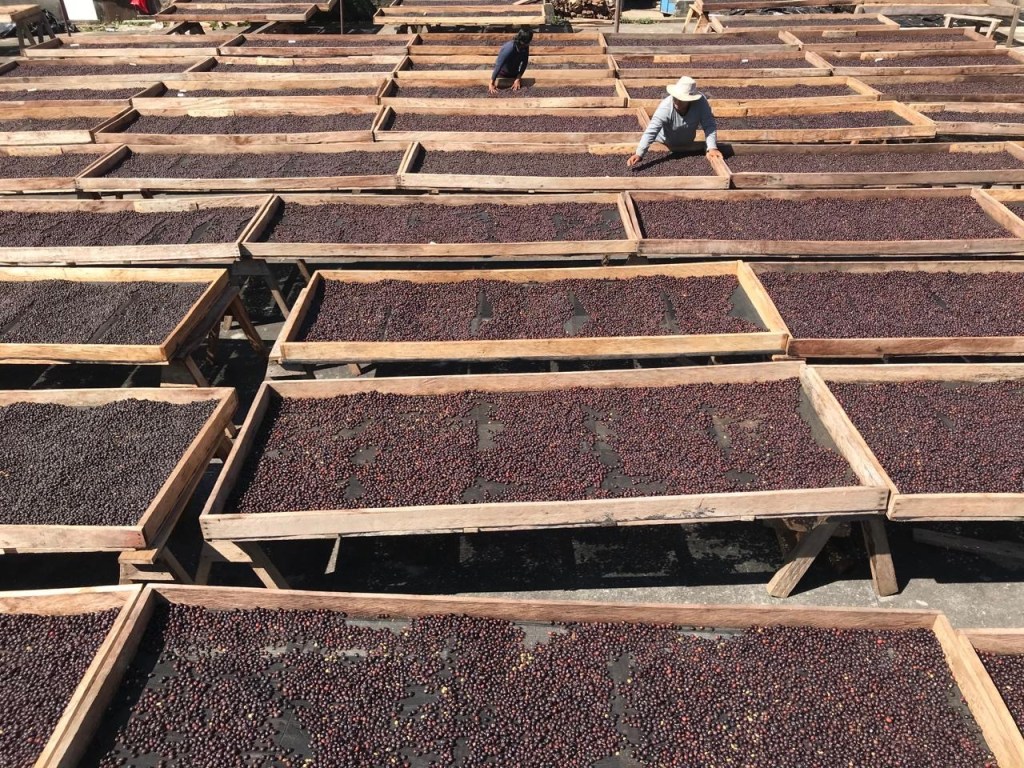
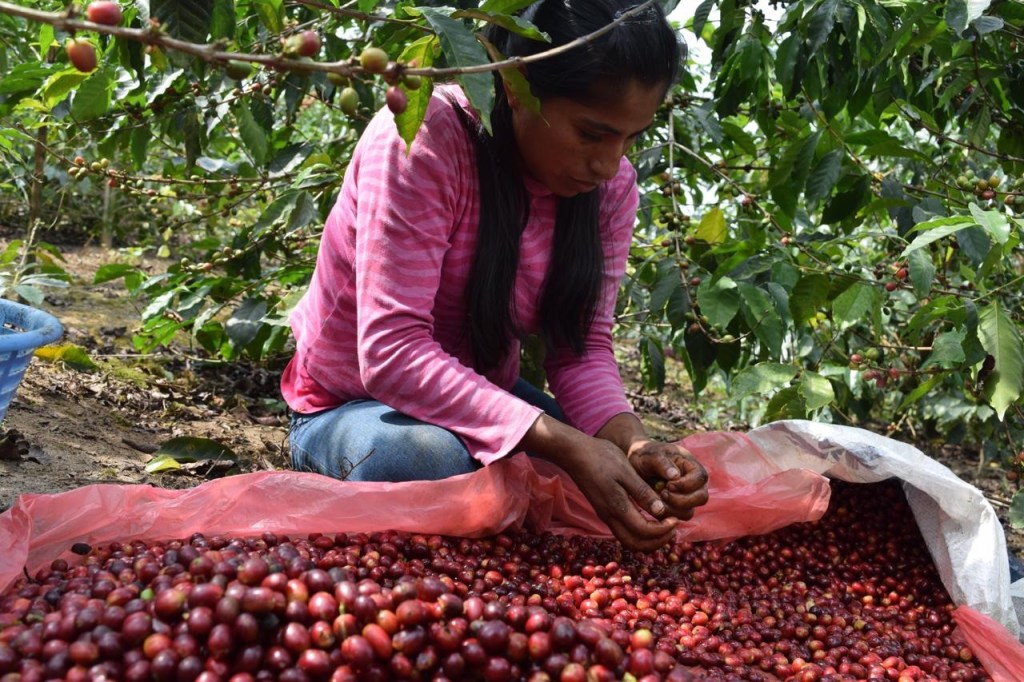
During the harvest, once the cherries reach peak ripeness, they are carefully handpicked and delivered to the wet mill to be sorted. After the underripe and overripe cherries are removed, the coffee is evenly dispersed on raised beds to dry in the open sun for 30 –35 days. Within the first three days, the cherries are moved three times per hour, then moved every half hour from dayfour to seven, and from day eight onwards, the cherries are moved every hour until drying is complete. This ensures an even drying and prevents the growth of mould. The natural process is utilized at Finca El Platanillo to preserve water and be more environmentally friendly. Once the cherries reach the ideal moisture content, they are transported to the dry mill to be hulled and prepared for export.
Quality is of utmost importance at Finca El Platanillo,andthey have a quality control team led by Stuardo’s son, Samuel, to understand how to attain a high-qualitycup without using too many resources. The farm has also started working with the Anacafé(national coffeeorganization in Guatemala) socialarm, Funcafe, to create Bachillerato en Ciencias y Letras con Diplomado en Café, an educational programto teach students about coffee production. El Platanilloand its sister farm, El Panorama, host students, providing them with housing and classes about coffee. Some graduates of this program have gone on to work for the Coto family’s farms
Platanillo cares deeply about its employees and the families living within the farm. A grade school was constructed in 1978 to teach the children of the staff, and in 2002, the Nuevo Platanillo Schoolwas opened to educate children at the farm and from surrounding communities. Thanks to the support of donors and the Coto family, the school now has a fully functioning computer lab with internet to teach children of all age levels

